03
Case Study · Legal Tech
Lex Leviter.
"An Idea of i-pods among the walkmans." — My CEO, to me
"An Idea of i-pods among the walkmans." — My CEO, to me
A growing legal practice was managing client intake, case threads, document requests, and team coordination entirely through untracked messaging apps and shared drives. This created zero traceability, frequent miscommunication, and a dependency on individual memory — not systems. Every new hire meant re-teaching tribal knowledge. Every missed message meant a delayed case.
Restructured the entire product hierarchy — from intake flow to case closure — into a single coherent platform language.
Designed end-to-end interfaces for Project Intake, Client Threads, Document Hygiene, TSR Generation, and the Lawyer Marketplace.
Facilitated design reviews with senior advocates and junior associates — reconciling two very different mental models of "how work gets done."
I joined mid-ideation — the product had ambition but no structure. I worked directly with the founding team to untangle their existing informal tools-based workflow and translate it into a system that could scale. The challenge was designing for lawyers who had never used a product like this before, and building their trust through clarity.
Owning end-to-end visual design across all modules — from wireframes to final high-fidelity screens.
Mapping micro-interactions across every state — empty, loading, error, and success — to build a consistent experience.
Conducted contextual interviews with advocates to understand how legal case work actually flows day to day.
Built a component library from scratch tailored to the density and complexity of legal workflows.
More time spent on clients. Less time spent on coordination.
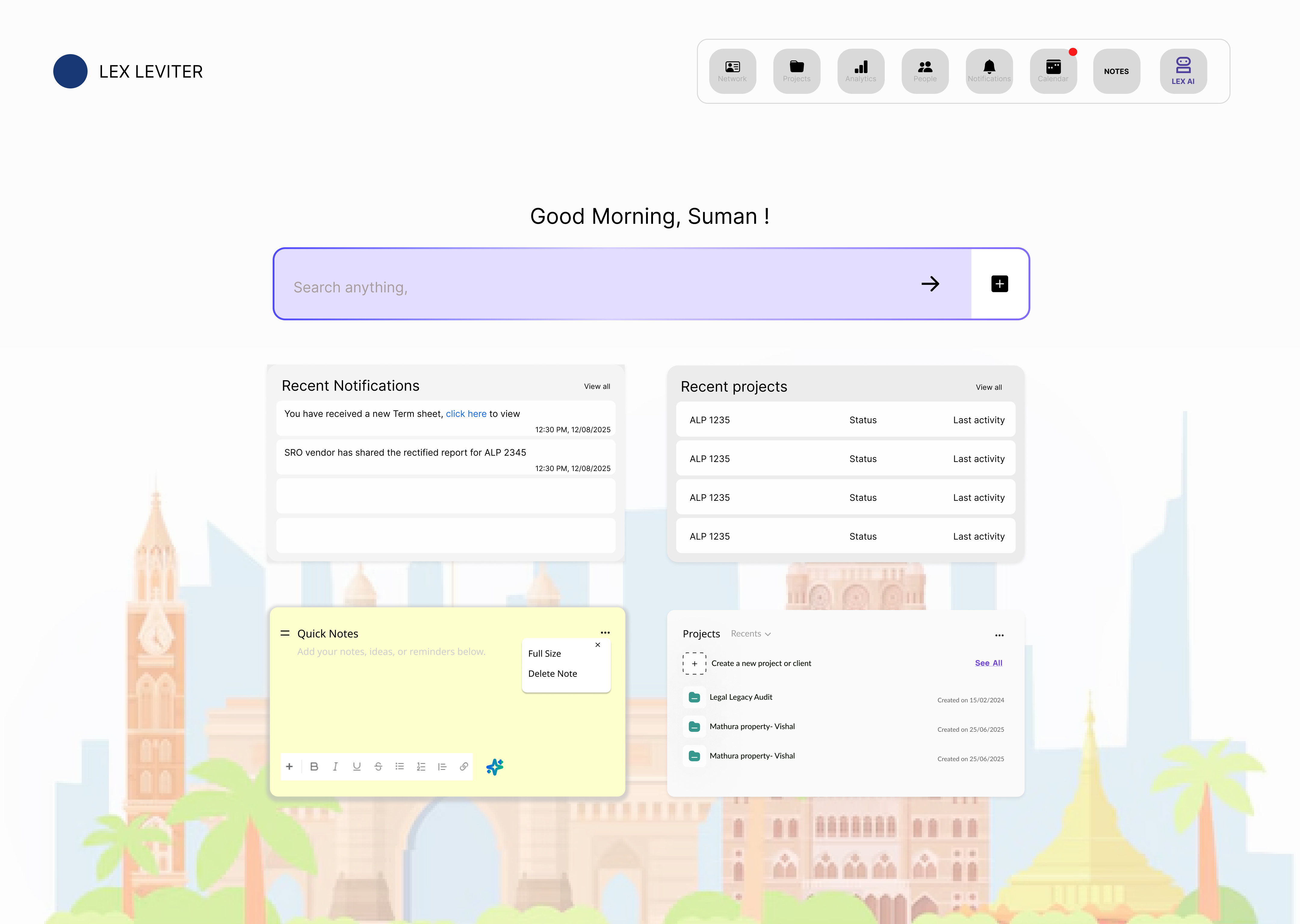
Structured intake replaces the unstructured messages. Every new case is captured with context — client details, matter type, urgency, and assigned team — in under 3 minutes. AI prefills common fields based on case category.
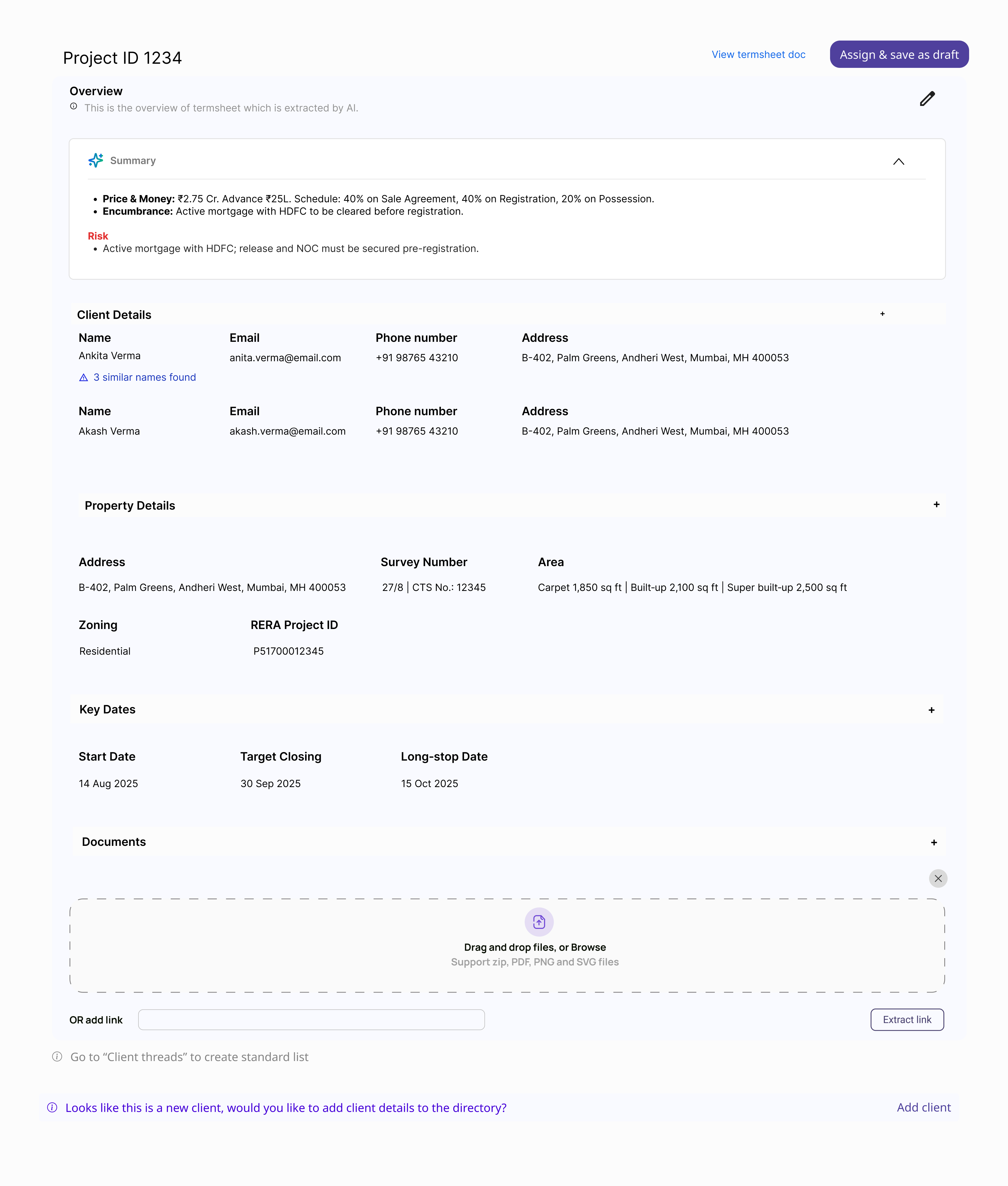
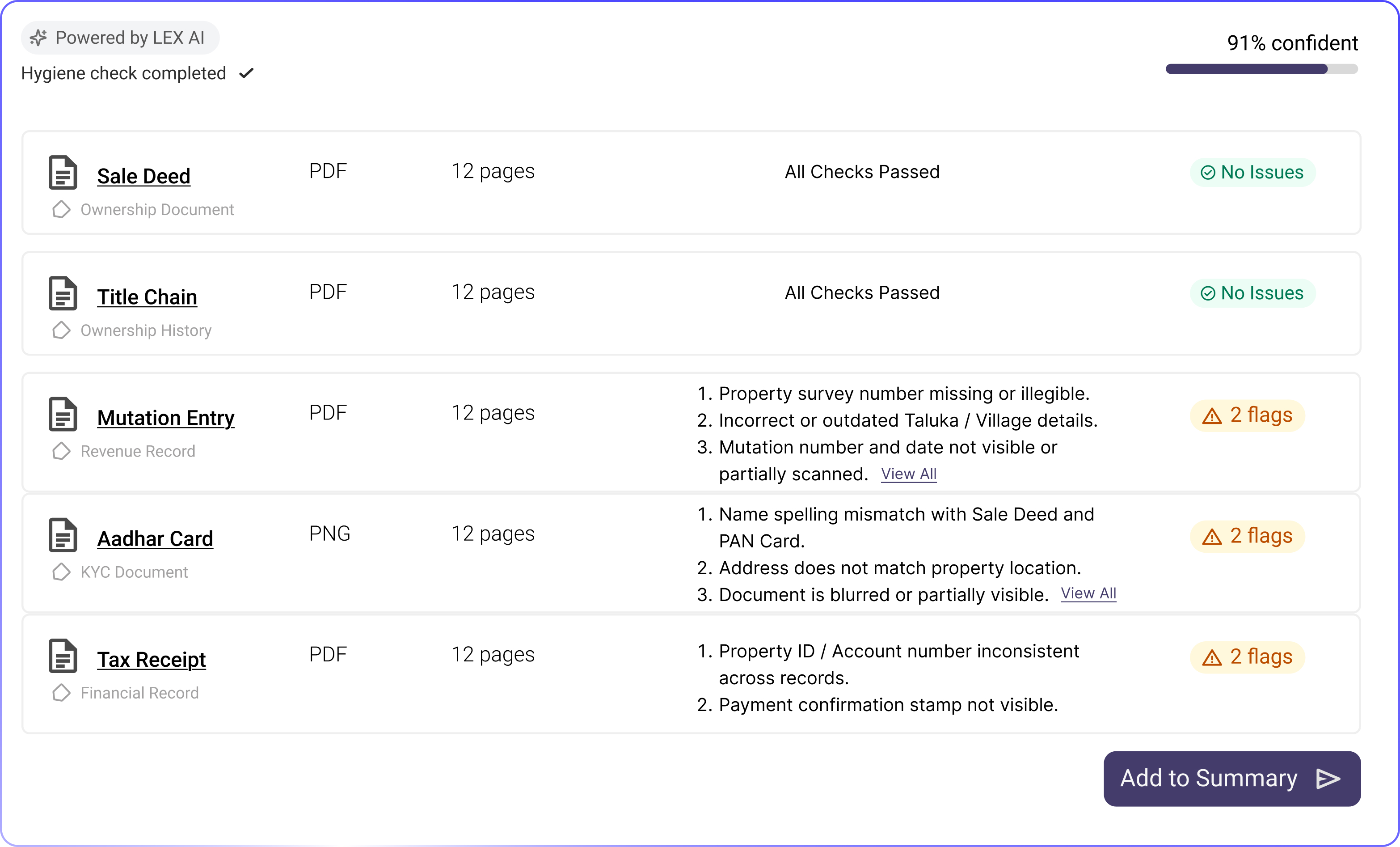
Auto-organises uploaded documents into case-relevant categories. Flags missing or expired documents before they become blockers.
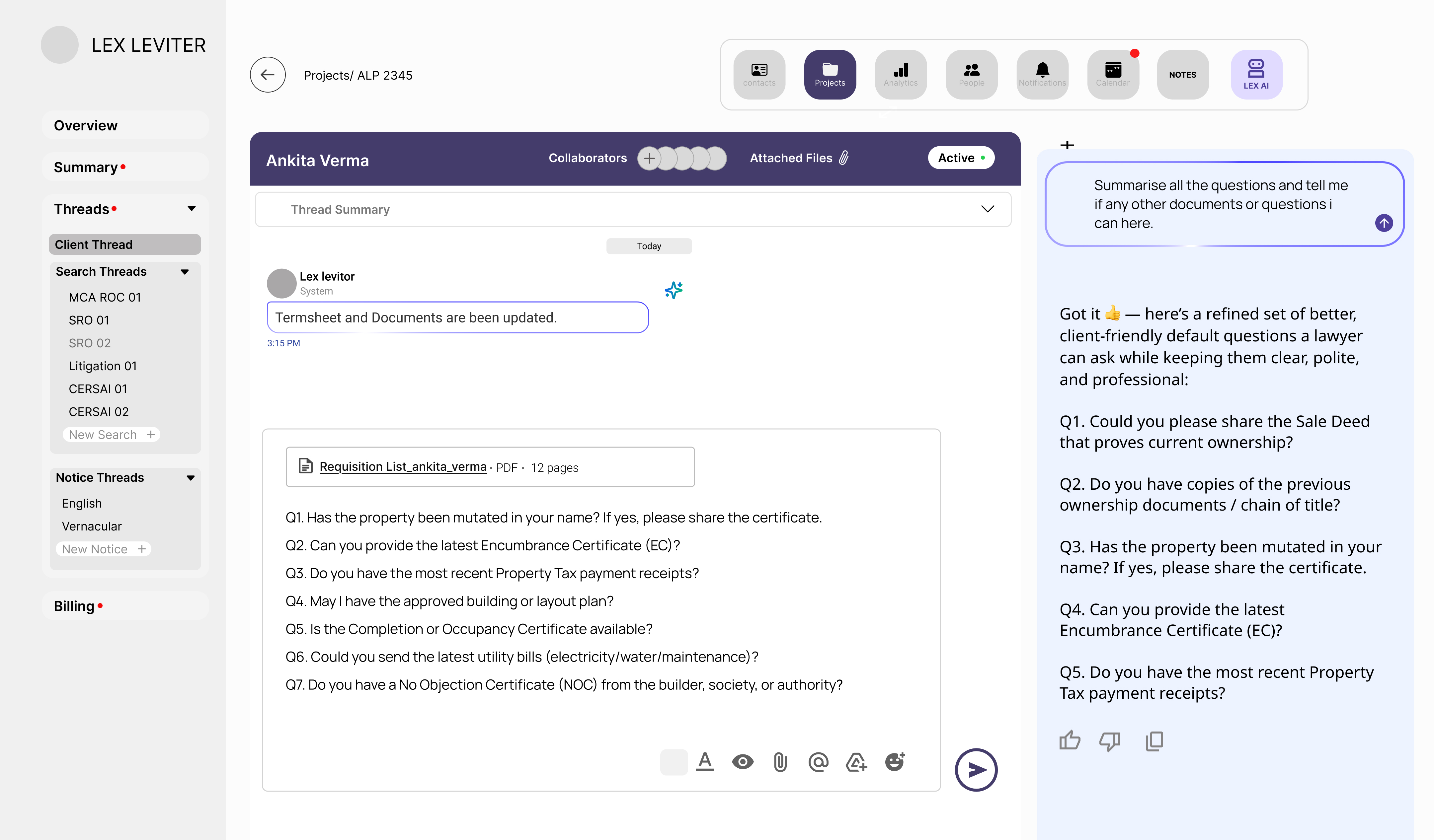
Threaded conversations per case. No more searching through scattered messages to find what a client said three weeks ago. Every message is case-linked and searchable.
AI drafts Title Search Reports and standard legal documents from structured case data. Lawyers review, annotate, and approve — cutting document preparation time from days to hours. Every draft is versioned and traceable.
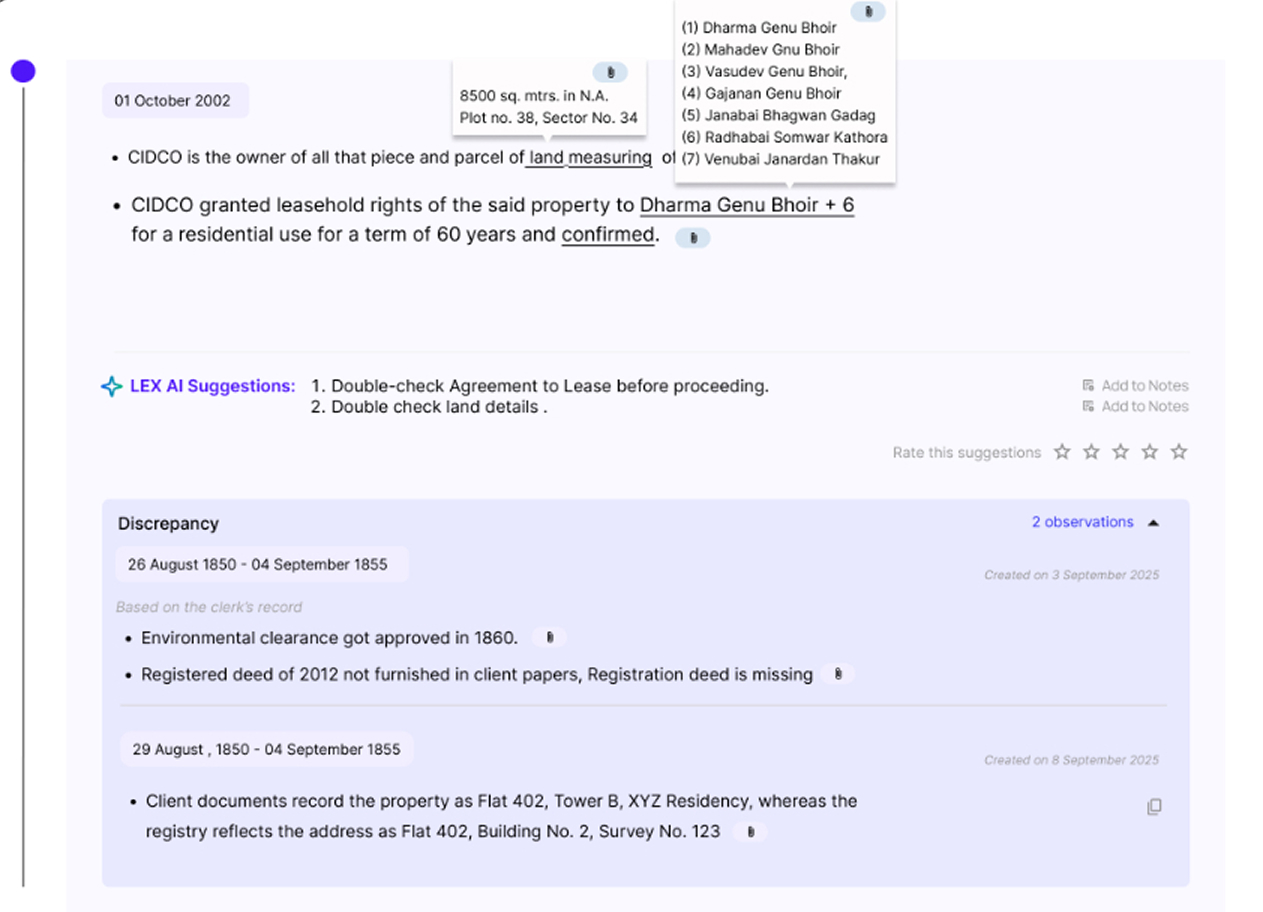
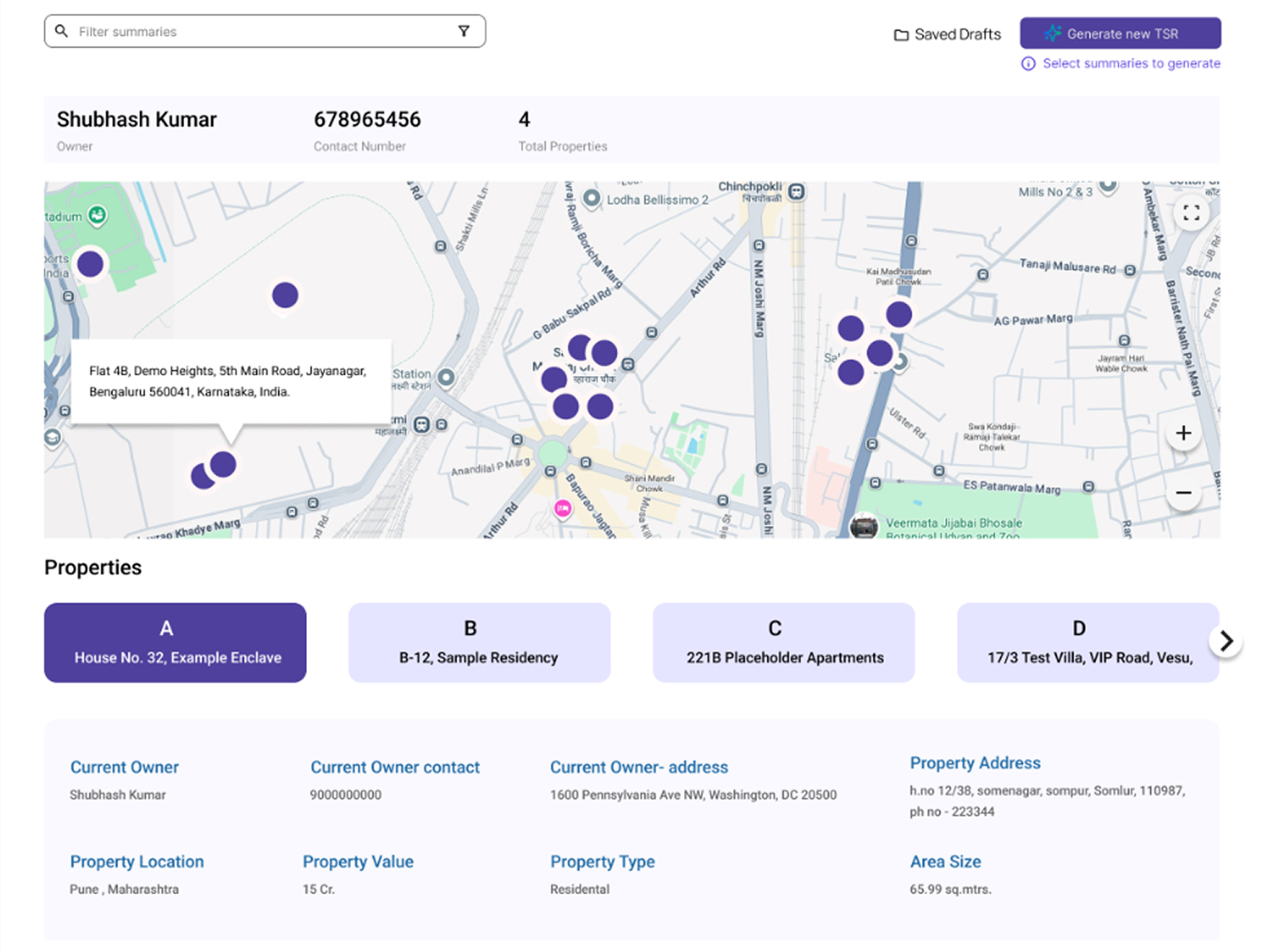
OCR and AI parse every uploaded document — extracting clauses, dates, and parties automatically. Content is sorted by relevance, cross-referenced against case maps, and flagged for review. No manual reading required to know what's inside.
Every interaction in the product is anchored to a case thread. This mirrors how lawyers already think — by matter — and prevents context from fragmenting across modules. Navigation always returns you to the thread.
Rather than hiding AI suggestions inside dropdowns, we gave AI a dedicated "thoughts" panel per case — visible but unobtrusive. Lawyers could glance, accept, edit, or ignore. Trust was built through transparency, not magic.
Legal documents were designed like structured newspapers — headline clause at top, supporting detail below, annotations in the margin. This made dense legal content scannable for the first time.
The intake form was ruthlessly shortened to three visible lines — client name, matter type, urgency. Everything else collapses into progressive disclosure. Lawyers resisted long forms; this got adoption within the first week.
Rather than asking lawyers to read every upload, OCR extracts the text and AI maps it — identifying key clauses, parties, and dates instantly. A spatial document map lets advocates orient themselves inside complex files without scrolling.
Legal work is high-stakes. Every destructive action — archiving a document, closing a thread — had a 5-second undo window. This dramatically reduced support requests and gave lawyers the confidence to act decisively.
The development team initially explored AI-assisted build tools to accelerate delivery. The CEO considered them — until it became clear they couldn't replicate the workflow depth, the look, or the feel of what had been designed. My work was chosen as the foundation. To ensure a clean handoff, I upgraded the Figma plan and used AI to generate developer-ready specs. The product shipped, tested well, and gave the firm something it had never had before — a system that could scale without depending on any one person's memory.
In legal work, the exception is not an edge case — it is the norm. I learned to design for the "what if this document is disputed" or "what if the client changes their case mid-thread" scenarios first, and let the happy path flow from that rigour.
Lawyers are trained sceptics. AI suggestions were initially ignored entirely. The turning point was showing AI's reasoning — not just its output. Once advocates could see why the system flagged something, adoption followed naturally.
Understanding the politics of a law firm — who defers to whom, which processes are sacred — meant the difference between a design that gets deployed and one that gets shelved. Listening before forming is a design skill, not a soft skill.
"It just takes the right team to believe in it long enough."